Hire an excellent and experienced criminal defense attorney. Get aggressive and strategic legal representation to protect your rights and freedom.
Had a run-in with the law in Montana? Get excellent legal advice and build a strong defense. Hire a savvy and experienced Montana criminal defense attorney.
Your defense lawyer at Judnich Law will advocate for you against the prosecution, fighting fiercely for your rights and your freedoms. We provide our clients with exceptional legal representation through the criminal justice system. And in all possible cases, we will get your criminal charge(s) reduced or dismissed.

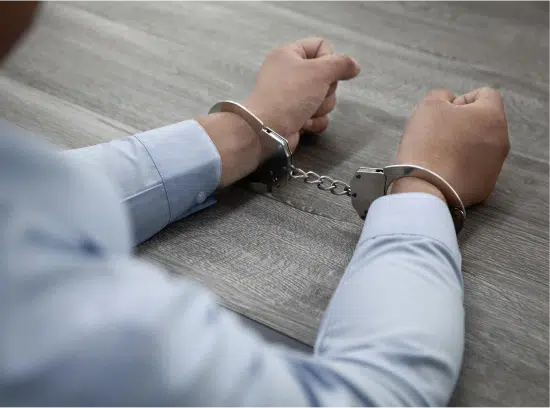
A Montana criminal defense attorney will stand by your side and fight for your rights and freedoms in all corners of the justice system. Judnich Law criminal attorneys build strong cases in defense of drug charges, DUIs, PFMA, white collar crime, and other crimes committed and/or alleged, both misdemeanors and felonies.
When charged with a crime in our US legal system, individuals have the constitutional right to have an attorney handle their case. This representation is so critical, a public defender will be appointed by the State for those who need legal representation to mount a defense against any criminal charges yet lack adequate funding to pay for such representation.
The criminal defense legal process is rather straightforward, and has not changed a lot since advocacy for the accused in the criminal law courts of Ancient Greece. The prosecution attempts to enforce the most severe laws possible and impose the greatest possible penalties, while the accused attempts to build a strong defense and ideally, have the charges dismissed.
In the United States, the accused may hire a private criminal law firm to construct a solid defense or work with the services of a public defender. But you get what you pay for. Cases end by dismissal, plea agreement, or trial verdict. This is the scope of criminal law.
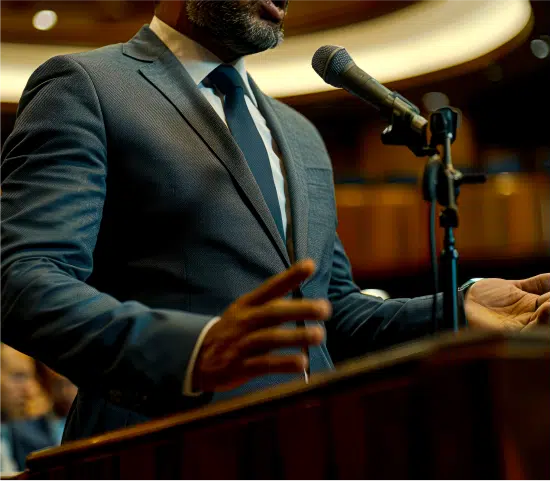

Your defense lawyer, whether a public defender or privately hired, will appear in Court on your behalf at all of your court appearances. The job of a criminal defense attorney is to help the client build a strong defense against the criminal allegations.
In criminal cases, a lot of federal laws protect the accused from being unfairly railroaded by the State. For starters, law enforcement need legal permission to make the arrest if they feel a crime was committed. They must adhere to a very specific set of rules and protocols. They must also perform the arrest according to a very specific process in order to protect the accused’s constitutional rights. A criminal defense lawyer ensures the State fully played by the rules in all ways, at all times.

Training, experience and focus on particular parts of criminal law are vital for excellent criminal defense attorneys. An attorney that handles all types of criminal cases is probably not a great choice for your specific charges. For example, DUI law is always changing and it requires continuous training and court experience to stay ahead of the government in defending cases.
Attorneys that don’t focus their practice on DUI defense can never defend a case as well as attorneys that focus on DUI defense every day for most of their clients.

Sometimes, yes. However, any time the government brings a case against someone, that person has a constitutional right to make the government prove their case beyond a reasonable doubt. Sometimes, the government is very out of line. Maybe the government cannot prove its case or does not have the evidence to support the crime they have charged.
But, if left to their own devices, the State would lock up everyone remotely accused of a crime and throw away the key. That’s their job, actually—to keep society safe from criminals and crime. But they have certain rules they have to follow. They can’t just lock up anyone they want just because they feel like it. Not in this country. The State has to have provable reasons for charging, arresting, and imprisoning this country’s people.
For those reasons, everyone deserves an advocate to stand up to the government. That is our role as defense attorneys.
Our primary imperative is to defend the individual rights granted to all within this country’s borders by the United States Constitution. Our own personal moral positioning with certain human acts over others is not what this is about. We believe in the Constitution and the inalienable rights it extends to the US populace. That is what we fight to defend.
Your criminal defense lawyer will ensure that law enforcement followed all of the proper protocols in making the arrest. We will review and, where appropriate, challenge proper handling of all matters related to probable cause and chain of custody. We’ll pour over every single detail of your case and be sure to exploit any and all weaknesses in how the State handled and charged their end.
Whatever the details of your specific case, probable cause is always something to review in criminal cases of all kinds. If law enforcement does not have appropriate probable cause to investigate the circumstances which led to your arrest, and your Montana criminal defense attorney can adequately illustrate that, then the case must be thrown out of the legal system via a dismissal.

Your defense lawyer will negotiate with the prosecutor to get your charge(s) reduced and consequently, your sentence also reduced. Oftentimes, the defense lawyer helps negotiate a plea bargain, where you will plead guilty to a lesser charge, and serve a corresponding lighter sentence. At times, your defense attorney can have a felony charge reduced to a misdemeanor.
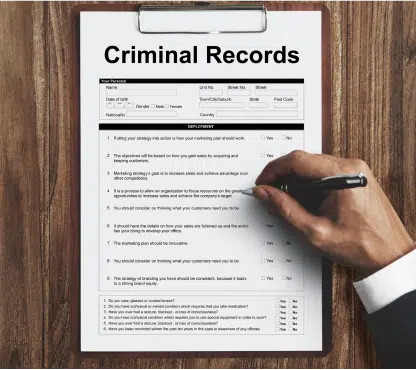
A good defense lawyer will help clients avoid a criminal record by getting charges reduced or dismissed entirely.
If we can get a felony reduced to a misdemeanor, by Montana state law, you can eventually have that misdemeanor expunged (erased) from your record. We will happily help with this process when the time comes for that, following the mandatory waiting period.
Our ultimate goal is to get your case dismissed.
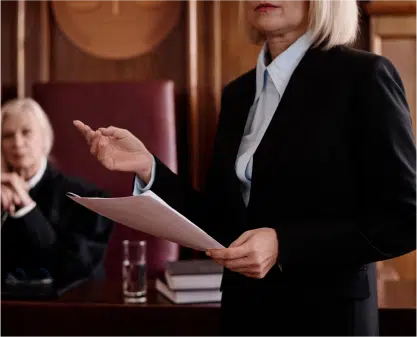
Absolutely. It is very common for prosecutors to overcharge a case or add charges that may not have enough evidence to be proved or are charged just to try to force someone to plead to a different offense. The State uses these kinds of intimidation and manipulation tactics against unsuspecting defendants all the time. Only an experienced defense attorney can help identify these problematic issues and cases so the accused can get a fair trial and find justice.
We are here to help, absolutely. When you need help with a criminal law matter anywhere in Montana, we are here for you. Contact the law office of Judnich Law for all of your representation needs in the criminal justice system across the state. We represent defendants charged with various crimes in Montana, and we can help.
https://leg.mt.gov/bills/MCA/title_0460/chapter_0180/part_0110/section_0040/0460-0180-0110-0040.html

When it comes to defending our clients, we press as hard as we have to. We don’t just pray for a fair outcome and leave it all in God’s hands. We fight tooth-and-nail for you. For your freedom. And in defense of your constitutional rights. Every step of the way. And we play to win.
When you’re faced with criminal charges, anywhere from DUI or marijuana possession up to more serious crimes, no one will fight harder for you than a criminal defense attorney from the Judnich Law Firm. This is our solemn promise.
We dig in. Hard. And we do not let up until we have achieved the outcome we are striving for.
Over the millennia, clients’ biggest complaint is that they cannot ever get in touch with their lawyer. And when they do, they get charged half-a paycheck for a quick question.
Not here. We have changed all of that. Our state-of-the-art client portal provides each client with 24/7 access to their entire client file, totally free of charge. Any time you want, you can review court documents, correspondence, and case notes. You can upload materials and even contact us directly through this portal.
After hours, we have a live operator answering our calls. The operator will take a message for you and send your attorney a text message immediately.
We also care how you feel about our representation. In our first meeting together, we will evaluate your case and answer your questions. We also want you to evaluate us to make sure you want to work with us. Positive attorney-client relations help us do better work for all of our clients as well as helping keep our clients happy. Legal entanglements are stressful enough. No one needs internal stressors from within the attorney-client relationship added to their legal challenges.
You can see, we take excellent care of our clients in-house, and we take excellent care of them against powerful external, prosecutorial forces.
